All posts by Eve Ogden Schaub

Unknown's avatar

About Eve Ogden Schaub

Serial memoirist Eve O. Schaub lives with her family in Vermont and enjoys performing experiments on them so she can write about it. Author of Year of No Sugar (2014) and Year of No Clutter (2017) and most recently Year of No GARBAGE (2023). Find her on Twitter @Eveschaub IG or eveschaub.com.

Breaking Up With Garbage: Eve’s New Year Resolutions and Final Thoughts

I have officially fallen out of love with garbage. Our relationship has been based on a series of lies and half-truths, and, at times, downright fantasy. It’s been unhealthy not only for me, but also devastating for society, the environment, and the planet as a whole. It’s time to break up.

Consequently, my first New Year’s Resolution is to cancel my garbage service. With very few exceptions, having garbage hauled away to be landfilled or burned is unnecessary: if we are thoughtful, virtually everything our household takes in can be recycled, reused, repurposed, donated or composted. The few things we actually want to throw away (such as Band-Aids or feminine products) can go to the dump on a pay-by-the-bag system, saving us around $60 per month, or $720 per year.
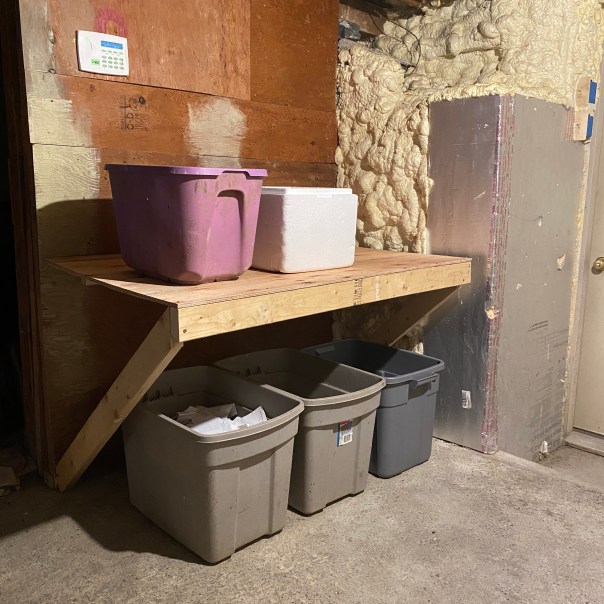
My Favorite Xmas gift: the SUPER SEXY UN-SINGLE-STREAM Recycling Center! Steve built me this so we can sort recyclables for the dump, which takes them for free.

My second resolution is no more fake recyclingRealcycling only. Much to my dismay this year I learned that the miracle of Single Stream recycling is largely a mirage: even if your provider accepts plastics #1-7, the only ones actually, truly getting recycled are #1 and #2. This is why my local dump takes #1 and #2 plastics– and no others– for free: because there is an actual market for them.

Unlike the resourceful Zero-Wasters who can display their yearly garbage in a jam jar, I have yet to figure out how to feed a family of five without buying products that use plastics that aren’t easily recyclable. This leads me to my third resolution: send non #1 and #2 plastics to Terracycle. Yes, it’s undeniably expensive, but not more expensive than the garbage service I’ll be cancelling— this year so far I’ve spent $481 on Terracycle boxes. Coupled with cancelling my $720 garbage service I’ll still be saving over $230. Although, like many people I’ve talked to, I have reservations about the Terracycle process— does shipping our trash to recycle it really make sense? And where is the YouTube video showing their actual recycling process? Can we trust them?— it is still the best, only chance I’ve found to do the right thing with these materials that really should not be being made in the first place.

In the meantime, resolution number four is that I will support EPR Legislation: Extended Producer Responsibility. This is the system by which companies are required to handle the waste generated by their product, rather than pawning it off on their customers. Think: bottle returns, or tire and paint take-back programs. Taxpayers need to understand that when companies aren’t responsible for “end-of-life” for their product and packaging, we foot the bill, through landfill and incineration costs, or clean up costs to remove it from the landscape and the ocean.

Lastly, resolution number five is that I will contact companies whose products I buy and let them know their packaging needs to be more earth-friendly. It seems like a drop in the bucket for one person to complain, but then again, they say one letter is worth like, eight million people out there who think the same thing, right? Stay tuned in this space for their responses.

Some Final Thoughts

Although I started this Year of No Garbage without really knowing where we’d end up, I’ve arrived at a place of conviction: garbage– in the conventional sense– is both harmful and unnecessary. But far and away the biggest offender is a material that didn’t even exist until the last century: plastic. The tens of thousands of variations of plastic made today do not degrade– and I’d argue that the fact that my toothbrush will outlive my great grandchildren is unethical. Immoral. A sin. Micro-versions of these plastics are showing up now in our bodies, our food, our poop and the placenta of newborn babies. They are killing animals and bird life everywhere in horrific ways, filling up our ocean water and destroying ecosystems. They create carcinogens, toxins and contribute to global warming every step of the way: from creation, through transportation and use, to disposal.
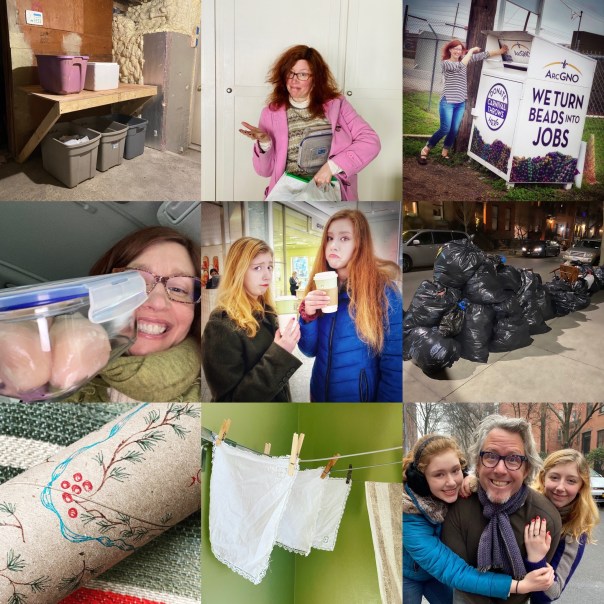
This is why I never want to use a garbage can again. My family, on the other hand, isn’t so sure. It was much the same when we did the Year of No Sugar project- I’m always the biggest zealot in the room. Just because I’ve become a fanatic, doesn’t mean they have.

At one point when we were all in the kitchen yesterday— cleaning, making food, chatting—the conversation turned to the end of the No Garbage year. My daughter Greta was looking forward to not having to wash, dry, and save every piece of plastic, Saran Wrap or tin foil that crossed our doorstep. My husband Steve is talking about bringing a garbage can back to the kitchen, which I am against, but am sure to be in the minority on. My younger daughter Ilsa just seems relieved that the third and final official project will be behind us.

Every once in a while I feel an unspoken question in the air: Can’t we just be a normal family? I feel bad about that. I hope I haven’t traumatized my children too much in the last decade, asking our family to interrogate basic things everyone else around us takes for granted as part of “normal” life… sugar, clutter, garbage: the things we eat, the things we keep, the things we throw away.

Socrates once said that the unexamined life isn’t worth living. Or maybe it was George Carlin. Either way I hope my kids will grow up with a sense of curiosity about the world and our place in it. I hope that if something doesn’t seem right, they’ll know that blind acceptance is not their only option; that one person can make a difference, by the simple act of slowing down and taking a closer look.

And, “normal”? I guess they’ve figured it out by now: I’m just not that mom.

Tooth Tablets and Period Panties: Eve Tries Extreme Zero Waste Products

Normally I am not all that excited to talk about periods, but TODAY I AM. That’s because, feeling adventurous in this last month of our Year of No Garbage, I went out on a limb and tried period underwear.

(Note to persons for whom periods are not relevant, or who are squeamish, feel free to skip down to where I talk about TOOTHPASTE.)

You may recall that for most of this Year of No Garbage feminine products have been part of our “Health and Safety” exception. In fact, they are pretty much the only things we’ve actually thrown away this year, along with Band-Aids.

Period panties aren’t plastic free, but they reduce your period’s plastic footprint

Recently, however, I started thinking about modern-day pads and panty liners, and the fact that they are composed primarily of plastic (up to 90%). Even tampons use plastic not only in the applicators, but in the absorbent part as well. Products used today will be littering the landfill, landscape, and ocean for the next 500+ years. Considering that a woman uses between 5 and 15 thousand menstrual products in her lifetime, this is bad news, and every bit as bad as all the other plastics we’ve been trying to avoid. Case in point: menstrual products are number five on the list of top ten plastic items found on European shores and beaches.

It hasn’t always been this way. It’s only within the last century that women switched from reusable cloth to sticky plastic pads and plastic tampons. But those reusable cloths weren’t always exactly mobile or convenient. In the Zero Waste universe there are a few products that champion reuse, but with vastly improved design, machine washable menstrual pads and menstrual cups among them. After looking around I decided period underwear looked intriguing, and was the least intimidating of all the available options (Underwear! I know how to wear that!).

I ordered three pairs of “Hiphugger” Thinx period panties, using their website’s “Know Your Flow” calculator to identify which absorbency model to buy, given my regular period characteristics. According to their calculations, I use 19 period products every month, and by using period panties could throw out 228 fewer disposables per year. And that’s just me: when you consider that we have three women in our household regularly using feminine products that adds up to A LOT of plastic.

Of course, guess what period panties are also partially made of? That’s right: plastic. All Thinx models contain some proportion of either Elastane, polyester jersey or nylon. The website says Thinx panties should “stay at maximum performance” for 40 washes, or two years. I have to admit I was disappointed: only two years? Then again, compared to several hundred plastic pads or tampons it is better. What would be better still is if Thinx had a take-back program to recycle old panties.

The packaging the underwear arrives in is “plastic free,” however each pair comes in a bag that looks like plastic but is marked “biodegradable.” We’ve been through this before: what does “biodegradable” really mean? Does it mean home-compostable? Probably not. So what do we do with it? Remember, it can’t biodegrade in a sealed landfill, so…?

Nevertheless, I felt pretty good about trying period panties out, and I came away with several conclusions:

—I found the design comfortable: thicker than a regular panty, but decidedly not diaper-like, it feels a lot like wearing a bathing suit bottom.

—At first I didn’t like that the inside material is black, because unlike when you wear a white pad, I couldn’t tell how much I was bleeding. How would I know when it was “full”? (Later I realized that having the inside white would mean constant staining and not look very attractive long-term.) You just have to trust these are doing their job, because you really can’t tell. To make it less nerve-wracking, I highly recommend trying these out when you are, you know, isolating at home (for some weird reason).

—Yes, the material is good at wicking and odor control. And— not to be completely obvious or gross here but—HERE’S how you know when it is full: you start to feel wet, and you will begin to smell it. This did not happen to me walking around, but when I went to pee and then pulled them back up it was then cold and uncomfortable.

—Washing them is very easy and, as promised, the blood does not stain other laundry. Importantly, to maintain absorbency YOU MUST LINE DRY them. I liked one commenter’s suggestion to put them in a lingerie bag throughout the week and then wash them all at once at the end.

—My three pairs were not enough for the whole week, of course. But Thinx are expensive: $34 each for the ones I purchased, with a small discount for buying three or more. I washed them after three days and kept using them, but six pairs would be better suited to get through the week.

—Although I had hoped Thinx could eliminate ALL my other feminine products, I realized that on heavier days I would either need to also wear a tampon (organic cotton ones would avoid chemicals and plastic) OR change underwear before the day was out. Other women whose reviews I read came to much the same conclusion: Thinx does not absolutely remove the need for any other feminine products.

—Despite the aforementioned wetness, I wore them all day long and I experienced no leaking. However, I do not have a very heavy period in general.

All in all, I liked the period panties from Thinx, but I wonder if I can’t find a solution that’s less expensive AND uses less plastic. So, next I want to try reusable menstrual pads. Stay tuned.

WE CAN NOW TALK ABOUT TOOTHPASTE SO SQUEAMISH PEOPLE COME BACK

Another extreme-to-me Zero Waste product that I’ve finally gotten around to trying is toothpaste tablets.

Yes, Tom’s Toothpaste recently debuted the #2 recyclable plastic tube that can go in your recycling bin and which is a wonderful innovation (I wrote about here it in October.) However, because of the tendency to shed micro-plastics, as well as the fact that plastic is not indefinitely recyclable, it is always going to be best to get away from the plastic entirely.

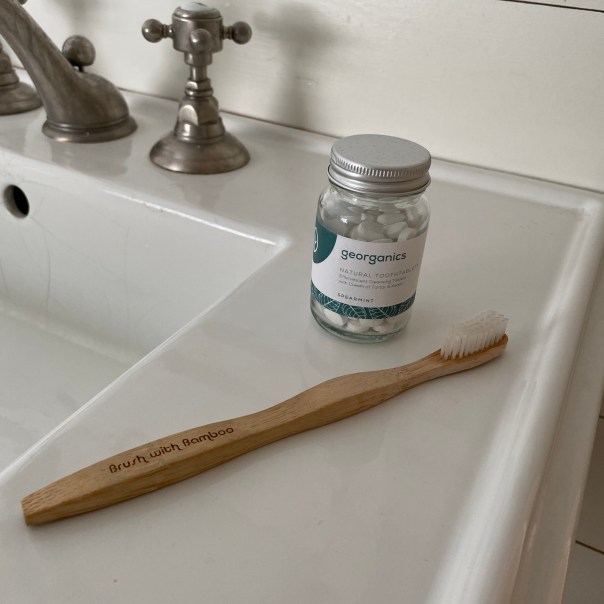
Enter the toothpaste tablet. I’m going to be honest and tell you that I actually thought you were supposed to chew these up and swallow them instead of brushing your teeth. Fortunately for me, the bottle of Georganics I bought from EarthHero comes not only in entirely plastic-free packaging, but also with the helpful instructions to chew the tablet up till it is foamy, brush your teeth, and then spit it out.

In fact you’ll be glad to spit it out, because unlike Tom’s Toothpaste these tablets taste terrible. In fact, the first time I tried them they tasted a lot like I was trying to take a bite out of a salt lick. My husband Steve tried them and was left trying to remove his tongue from his mouth.

Okay, the glass bottle is adorable.

Then a funny thing happened. The more I used the tooth tablets, the less the taste bothered me. Coupled with my bamboo toothbrush that can biodegrade in my compost, I now feel really good about this new plastic-free tooth brushing routine. (Steve has yet to be convinced.)

THE UPSHOT

There’s a lot of noise out there being made in the name of Zero Waste, and lots of people looking to make money from this “trend.” But how many more metal straws or fabric tote bags, do we really need? The fact is that, more often than not, Zero Waste doesn’t mean buying new products, it means not buying something when you normally would.

But there are a few products out there that can provide meaningful change, if we look carefully and are thoughtful. Trying new products, new ways of going about our regular routine, is scary. There’s a powerful pull in the familiar, and who has time to try out something uncomfortable or expensive that just might not work? Research and reading up can help, especially reviews by non-sponsored bloggers.

So, if you’ve always wondered what the deal is with bar shampoo, or Furoshiki cloth wrapping, or reusable toilet paper here’s my thought: why not pick one thing, and make a New Year’s Resolution to find out?

I mean, except the reusable toilet paper. Obviously.

A Day of No Plastic

During our Year of No Garbage I’ve come to realize that plastic is Public Enemy Number One: it doesn’t degrade, it often can’t— or won’t— be recycled, and it is doing all kinds of bad things in our bodies and in our environment. We have invented a monster, and the monster is everywhere.

So it occurred to me to wonder: How long could a person today avoid plastic? For example, how hard would it be to avoid plastic for… a single day?

I decided to try it. After assuring my family I would attempt this particular challenge solo, I laid out a quick set of rules. It would be very literal: I couldn’t touch plastic. It would last from the moment I got up until the moment I went to bed. And no obvious cheats —like wearing gloves.

Leading up to this Day of No Plastic I was super excited: weird experiments, of course, are my idea of a good time.

But I also began to get a little concerned. Every day I realized more and more things I wouldn’t be able to use. Not only could I not touch pens, my alarm clock, my hairbrush, the computer, or pretty much any food packaging, but I also couldn’t touch key items such as the toilet seat, the telephone, or even medication bottles. Most of my clothes were off limits because of synthetic fibers, including all tights, socks and bras.

I couldn’t drive anywhere, because cars are made of 50% plastic. This was probably just as well though, because I also couldn’t wear my glasses.

Still, I had no idea. Not really. I woke up on the morning of the appointed day and after carefully hovering over the freezing cold porcelain, automatically used the plastic soap dispenser to wash my hands. I was barely awake and already I had made MISTAKE #1.

At breakfast my family exclaimed over realizations of all the things I wouldn’t be able to touch that day.

You can’t answer the phone!

Hey Mom, you may not be able to turn on a light switch… but you can use an oil lamp!

I couldn’t do any of my normal exercise, because my yoga mat, our mini-trampoline, and the Bowflex are all made of plastic. A walk was possible, but I wasn’t sure I had any shoes without plastic. Or a coat without polyester.

There was an extended discussion over whether I would be allowed to walk on our floor, which is painted—thankfully resolved when my husband Steve recalled that the latex paint is covered by a natural finish made of whey protein— and whether I could sit in my chair in the living room—The label says it’s made of “mohair”? What is mohair? Turns out mohair is goat wool.

So I wouldn’t have to learn how to fly, or be required to relax by sitting on the wood coffee table. That was good.

Greta helpfully pointed out I couldn’t even get out of my own pajamas since the buttons are made of plastic. A few minutes later I went upstairs, forgot this entirely, and made MISTAKE #2.

Lucky for me our shower is tile. But I had to ask the girls to pour shampoo out of the plastic container for me. I was starting to feel like an invalid. It was as I got dressed in a pre-selected outfit composed entirely of cotton and wool— in the dark because I couldn’t turn on the light switch in my closet— that I began to get a sinking feeling.

There I was, without bra, make-up, or brushed hair. I made MISTAKE #3 while trying button my own sweater. Plastic buttons, AGAIN.

Now that I was at least clothed, what would I do with myself all day? Normally I’d write or do research, but the computer is all plastic. Magazines and books were off-limits, since most use plastic in the glossy pages and covers. Doing laundry was verboten, since all the washing machine dials are plastic, and who knew so many of our clothes and sheets are blended fabrics that use synthetic plastic materials? I couldn’t clean, because even my homemade cleaning solutions are in plastic bottles, and the vacuum cleaner is plastic.

I thought, at least I can clean up the kitchen.

MISTAKE #4: Picked up a plastic container.

MISTAKE #5: Pulled out plastic shelf of the dishwasher.

I found myself moving in slow motion, in an attempt to think before automatically touching something. Maybe I could veeeeeeeery carefully get ingredients out for making dinner later…

MISTAKE #6: the cap of a spice container.

A welcome diversion was the arrival of the mail, which gave me the chance to make

MISTAKE #7: Touching plastic tape while trying to open a box.

Lunch came and along with it MISTAKE #8: I touched a plastic bag trying to get a chip to eat. Ilsa ends up feeding me one and I feel like a toddler. I am five.

By this point I was walking through the house like a ghost with no power to affect the physical world: leaving lights on, leaving dishes at the table, leaving laundry unfolded. Without my glasses nothing was sharp and I walked around in a kind of a fog.

By mid-afternoon I’d become actively paranoid. Are you sure the chicken coop door handle isn’t plastic coated? I asked Steve anxiously. REALLY? I touched it gingerly and was relieved: the black handle was cold, the way metal should be.

At this point I had come to the realization I couldn’t do anything I normally do. Exercise, cooking, cleaning, writing, research, email… it was kind of like having a vacation day, but the worst, most frustrating vacation day ever.

My only solace was my embroidery project. I’d checked the thread and confirmed it was 100% cotton, thank goodness, and the towel, I knew, was cotton. Then it happened. I chanced upon the tag on the towel and read with dismay: 57% cotton, 32% polyester, 11% rayon.

Sighing, I finished my thread, folded the towel up and put aside MISTAKE #9.

Was it too early to go to bed? It was 2:30 PM.

“You could knit!” Ilsa suggested. “I could open the knitting book for you!” I slumped. Having people do so many menial things for me was unfamiliar and exhausting. It felt like a weird new kind of meditation retreat: I just sat in my armchair and watched other people do things: wrap Christmas presents, make coffee, scroll on their phones, do homework, open mail… not touching plastic meant I couldn’t do any of it.

MISTAKE #10 came when I tried to make dinner and automatically touched the kitchen timer. This was followed in rapid succession by:

MISTAKE #11: dishwasher rack. AGAIN.

MISTAKE #12: colander handle.

MISTAKE #13: cheese grater.

By the end of the day I had resorted to averting extreme boredom by reading the classifieds in the free newspaper circular that comes every week with our mail. I also perused a jaunty article entitled The Various Types of Glaucoma and Their Symptoms.

When I headed to bed, my hand stopped by the lamp on the nightstand, hovering by the plastic switch— HA! — it almost got me.

I still hate plastic and everything it is doing to us, but now I have a newfound understanding of what we are really up against. Who knew that in only a few short decades our society could have so thoroughly encased ourselves in mysterious plastic chemicals, to the point that doing without them immobilizes us?

Recently I happened upon an article that was published in the New York Times entitled Life Without Plastic Is Possible. It’s Just Very Hard.

I beg to differ- and I speak from experience.