Tag Archives: Year Of No Garbage

Can Mardi Gras EVER go Green?

The annual New Orleans celebration of Mardi Gras is unlike anything I’ve ever seen anywhere. Its focus is parades: lots of them. Between January 6 and “Fat Tuesday” they have literally dozens of them. This year there were over seventy parades, each with its own theme, costumes, paraders and music. It’s a celebration that is beautiful, funny, overwhelming and raucous, and it is steeped in a wealth of arcane and fascinating tradition.

It’s also a particularly obnoxious example of waste run amok.

(You can also find this video on my IG and TikTok)

It’s been long accepted that the festivities of Mardi Gras annually trash the city. (I first wrote about this phenomenon back in 2020.) Mere hours after a parade’s conclusion, the city clean-up crews hit the streets with all the subtlety of an amphibious assault. In fact, being able to handle such an onslaught of litter even seems to be a point of pride, as in “We may not be able to fill the potholes, but we know how to clean up after a parade!” Until fairly recently, New Orleans officials used to judge the success of their Mardi Gras tourist season by measuring the amount of trash that was collected in its wake.

Of course, the more trash, the greater that year’s success.

Parading in anticipation of Lent has been a New Orleans tradition for a long, long time: over two hundred years. In his book Mardi Gras Beads, Doug MacCash explains that it wasn’t until the 1870s that throwing inexpensive trinkets to parade watchers became part of the tradition. And at least as early as the 1920s, newspapers were commenting on the disaster left behind.

“Empty boxes, shreds of paper and broken favors,” as one Times Picayune reporter described. In that same article, one young girl reportedly asked her mother, “Can God see all this mess?”

How it started… how it’s going: cheap hand-strung glass beads gave way to industrially produced plastic beads

But really, they hadn’t seen anything yet, because in the 1950s came the advent of a magical material that was durable, dirt-cheap, and could be made into almost anything. In just a few short decades this material would find its way into every aspect of the Mardi Gras celebration. From the ubiquitous bead necklaces to cups, toys, beer cozies and stuffed animals, not to mention the plethora of wrappers and bags they arrived in, these days it’s hard to even imagine a Mardi Gras without the presence of plastic.

But I’m going to argue that we can and we should. Further, I’d argue that even if you don’t give two figs about Mardi Gras, it matters.
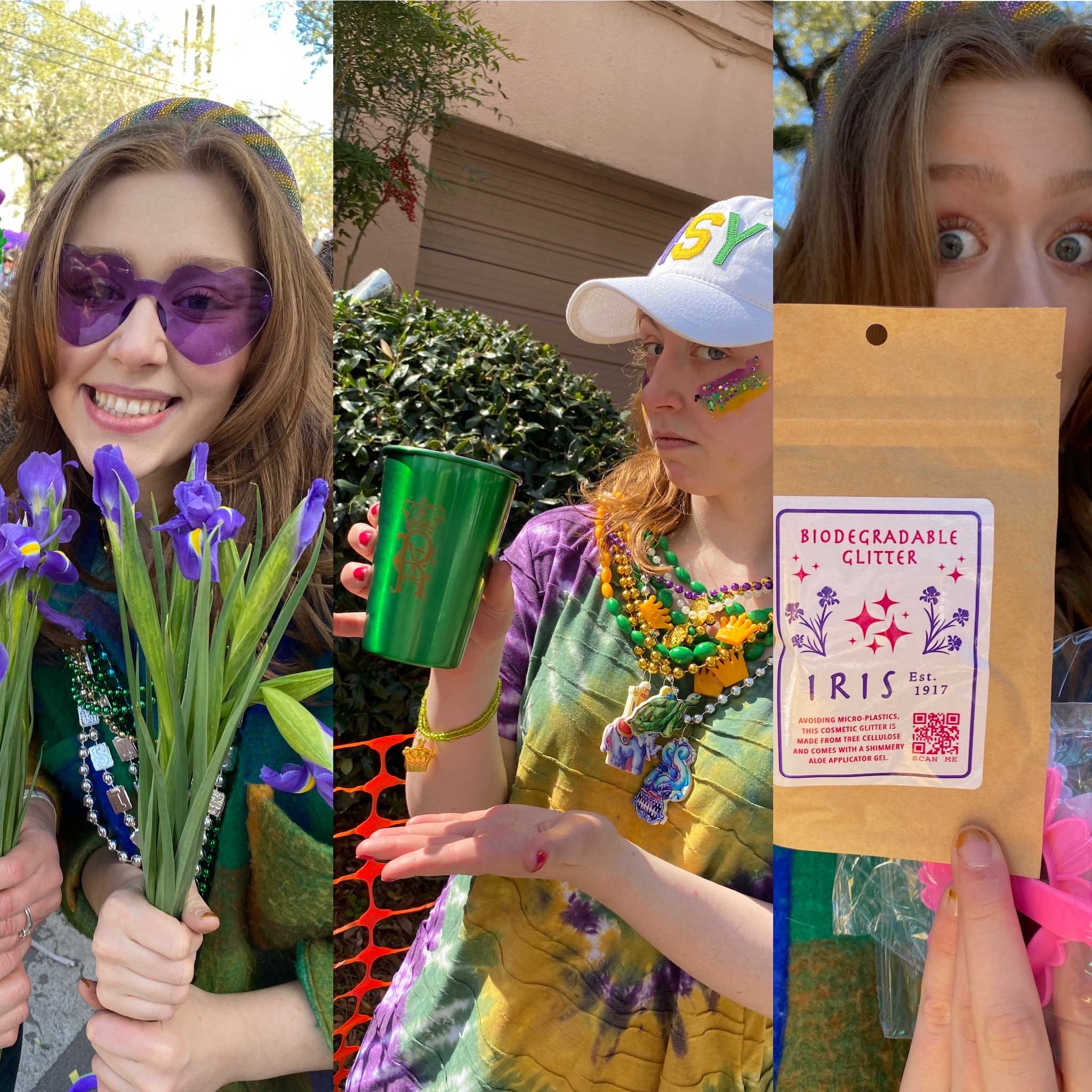
Fresh flowers, aluminum cups and biodegradable glitter were all parade throws I’d never seen before

As you can see in my video above, there are signs- lots of them- that many Mardi Gras paraders are thinking about what they choose to throw from their floats and choosing alternatives to plastic. In the handful of parades I attended this year we saw aluminum cups, ceramic medallions, glass beads, wooden train whistles, biodegradable glitter, cloth bags and even fresh flowers being thrown.

Another thing I saw for the first time: boxes in hotel lobbies for “Bead Recycling.”
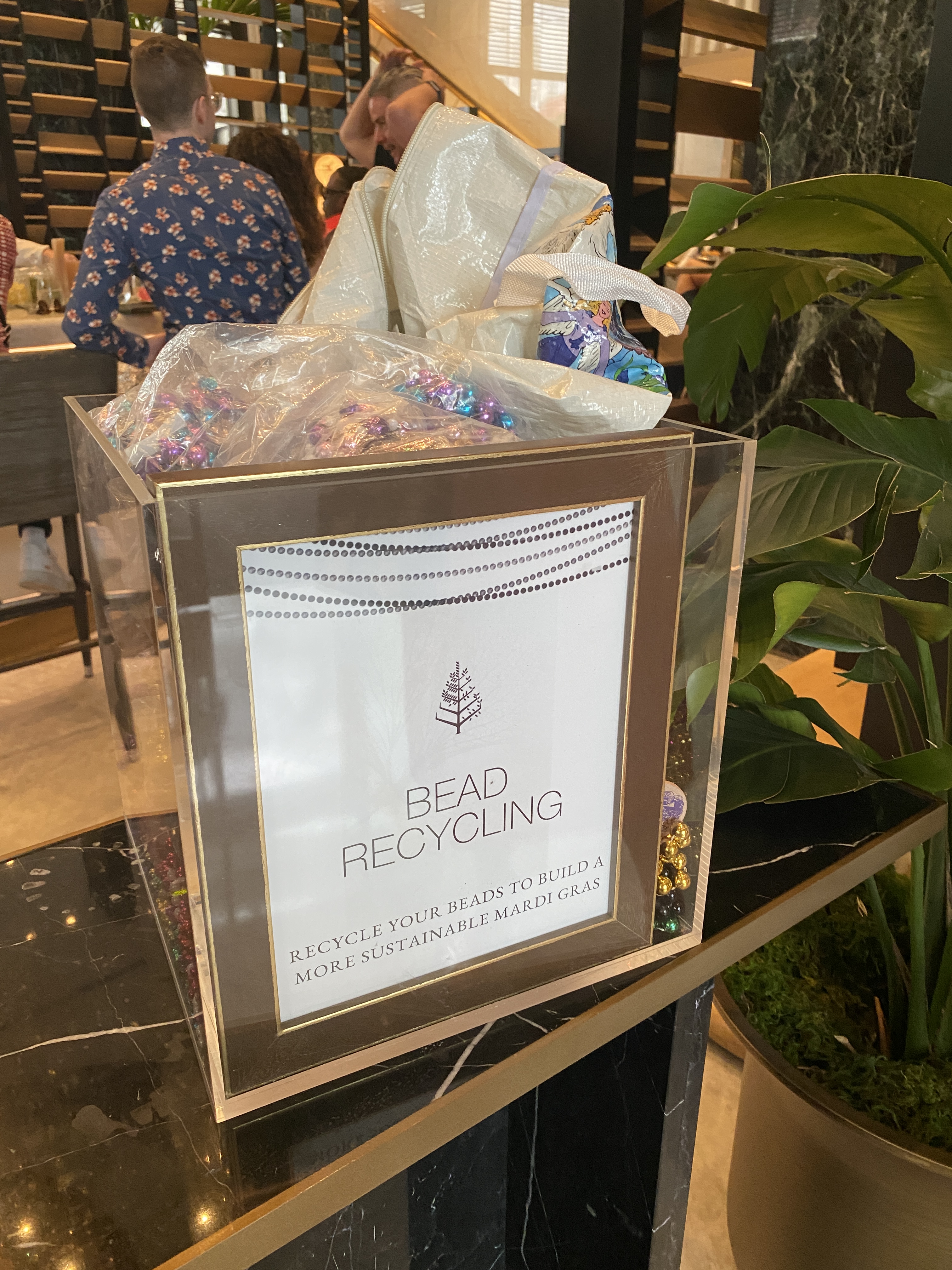
Evidence that the terms “sustainable” and “Mardi Gras” can co-exist in a sentence without killing each other

And lastly? I saw a lot of non-Mardi Gras efforts at sustainability too— admittedly some better than others— but all of which told me that plastic, waste and sustainability are issues on the minds of many New Orleanians.
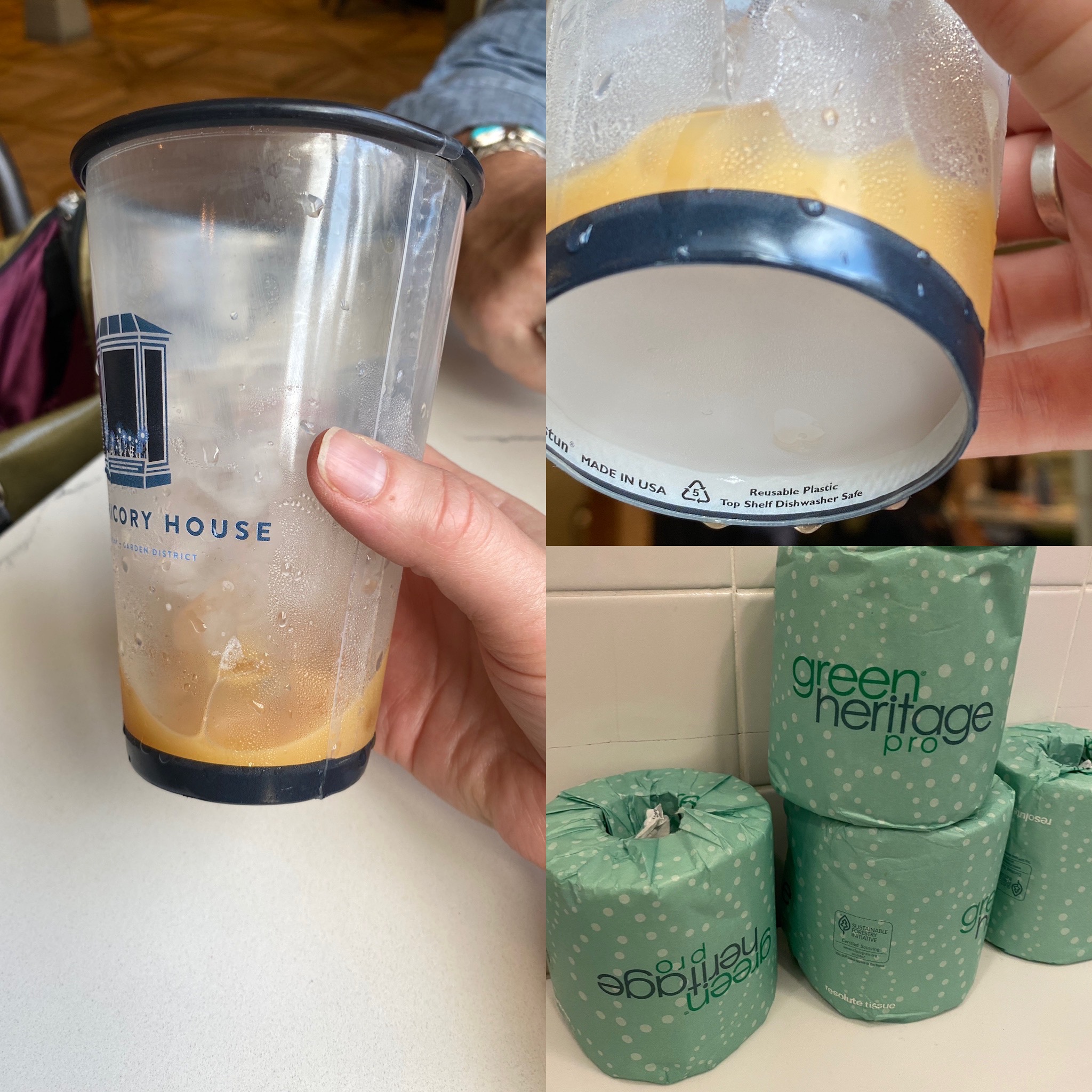
I appreciate this coffeehouse’s efforts to offer a cup that folks might reuse at home, but #5 plastic is neither recyclable, nor should it go in the dishwasher. A better choice? Washable ceramic mugs and encourage patrons to bring their own refillables.
Green Heritage Pro is recycled paper TP.

I was also delighted to have the opportunity to visit Vintage Green Review, New Orleans’ first zero waste supply and bulk refill shop. Unlike some “sustainability” shops I’ve been to that feature clothing for people who want to play Little House on the Prairie, and don’t mind paying $300 for a handmade butter dish, Vintage Green Review focuses on real world stuff that you might actually need: natural rubber hair ties, plastic-free Q-Tips, toothpaste tabs. They’ve been in business since 2021 and I’m kind of jealous. I want one in my town.
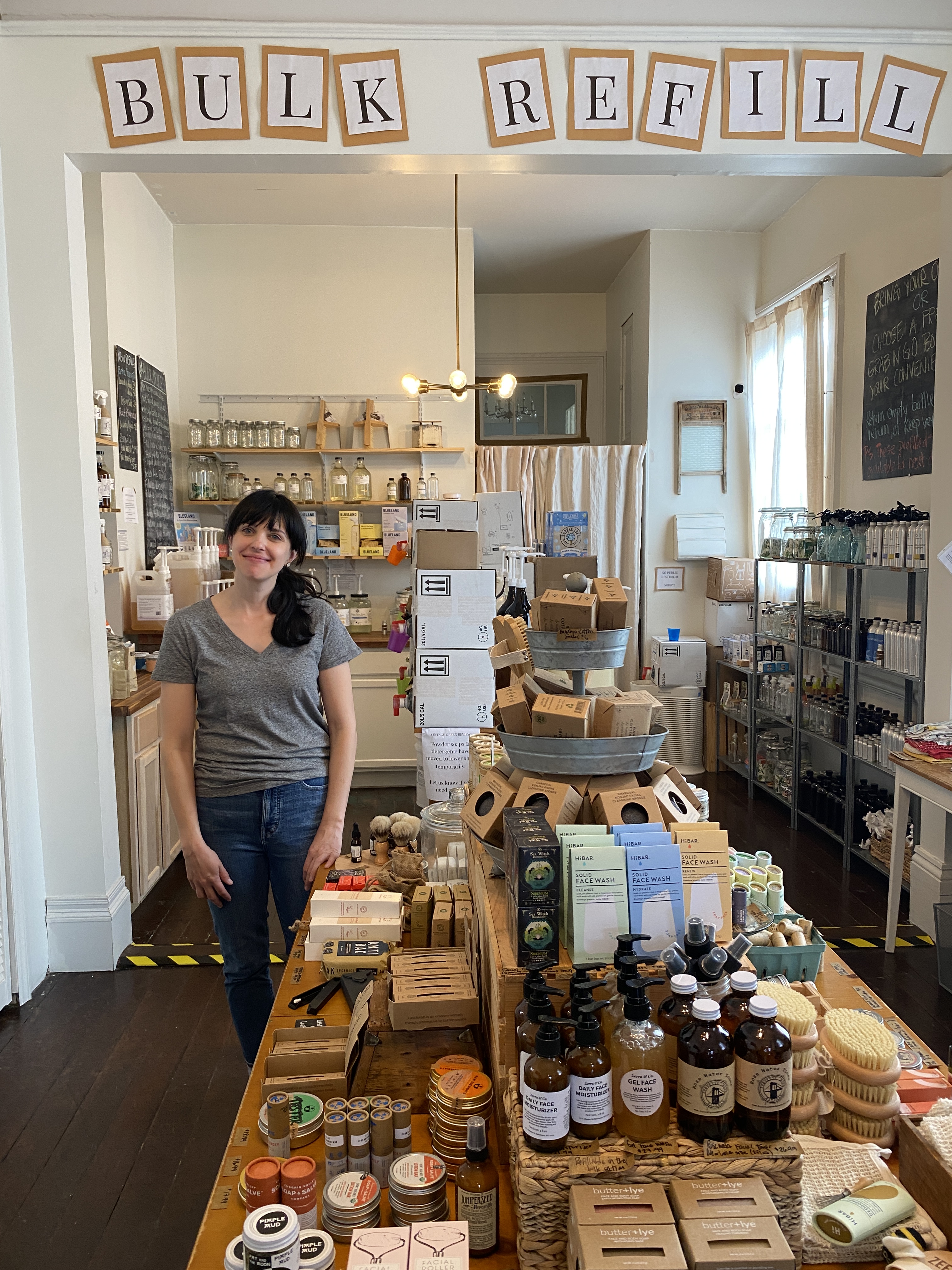
Sarah Andert owns and operates the Vintage Green Review

So, despite everything, there are signs that things at Mardi Gras, and in New Orleans, are changing.

But what does this matter to the rest of the world?

I think the reason it matters is that we all celebrate things. Mardi Gras is an outsized example, but in our current culture, plastic waste is virtually synonymous with all types of celebrating, from Macy’s Thanksgiving Day parade to a four-year-old’s birthday party. And I think often, when we’re presented with the need or opportunity for change, we mistakenly believe the choice is between going on as we have been, or giving up on the activity altogether.

Do we have to give up on Mardi Gras— or parades or parties— if we want to stop using single-use plastic? 

Of course not. Once upon a time we had celebrations without disposables, and we can do it again. We just need to think differently. Change will follow.

And the really good news is? In New Orleans that process has already begun.

Don’t Be Fooled: Wipes Are Plastic

Wipes are sneaky. Environmentalists can spend countless hours discussing the benefit-versus-harm of everything from glass jars and compostable forks to Legos, but when if you bring up wipes you’re likely to get a lot of blank looks.

That’s because wipes fly under the radar. They look like paper, but their whole purpose in life is to do what most paper can’t: hold together while wet. If you don’t know what I’m talking about think about the last time you ordered a messy meal in a restaurant and with your napkins they brought you a Wet Nap.

In fact, the Wet Nap was where it all started over a half century ago when it was invented and trademarked by a guy named Arthur Julius, among whose first customers was a little fast-food chain named Kentucky Fried Chicken. Today the wipe, or “moist towelette” as it is also known, has morphed into literally thousands of different products. There are wipes for polishing furniture, stopping acne, cleaning babies’ bottoms, and disinfecting countertops. There are wipes for applying perfume, lotion and deodorant, wipes for sanitizing make up brushes, soothing hemorrhoids, and removing nail polish. PS: Disposable face masks are wipes, too. (I first wrote about wipes in this post in 2021.)

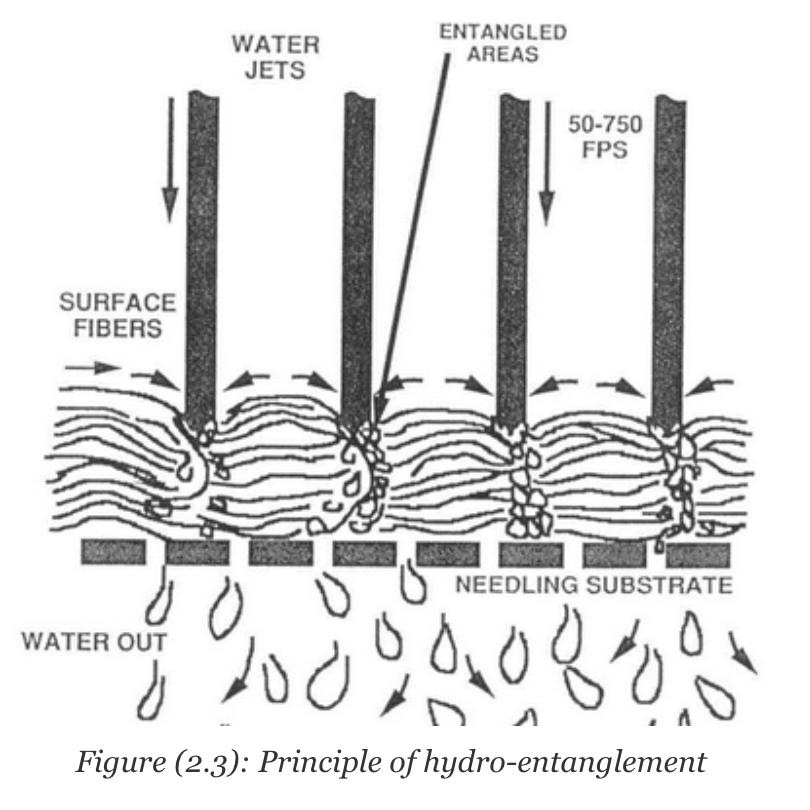
Ninety-nine percent of wipes are made with varying combinations of plastics and cotton which are bound together by a big machine that sprays high pressure water at them until they become hopelessly enmeshed. Impress your friends when you tell them this process is called “hydroentanglement”! The material that results from this process is appealingly called “spunlace,” although I was disappointed to learn that it involves no lace and no spinning.

So, when we talk about staying away from Single Use Plastics and Disposable Plastics, or the harm they do to the animals and the landscape and our bodies, we are not just talking about Styrofoam cups and plastic take-out containers, but we’re also talking about wipes.

But it gets worse. Because even though wipes contain plastic, they feel like cloth or paper, so lots of people flush them down the toilet. Have you ever heard of a fatberg? It is a monumental sewer blockage. The term was coined around 2010, and in 2015 a British sewer company reported that two-thirds of their blockages are now caused by… wipes.

Fun, right?

But what about “flushable” wipes? You may reasonably ask. The good news is that if a personal care wipe (the kind you clean your tush with) is labeled “flushable” it cannot contain plastic. Yay!

The bad news is that sewer experts will tell you that when it comes to preventing blockages, it probably doesn’t matter. This is because the wipe just doesn’t have enough time or agitation to disintegrate before it reaches the sewage pump. If we are lucky, the wipe gets filtered out and set aside to be either landfilled or burned. If not? Fatberg.

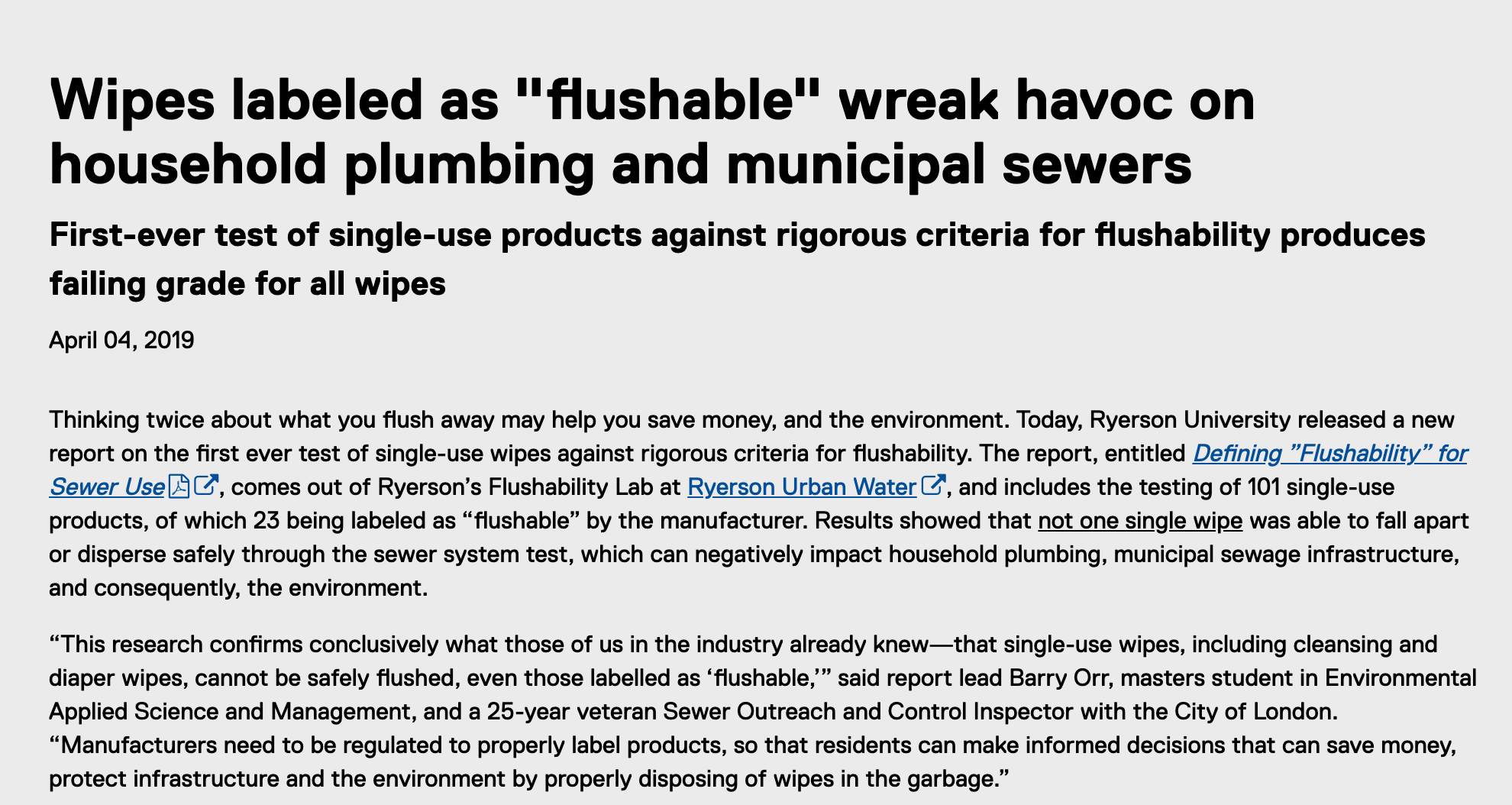
What’s more, in 2019 Forbes conducted an independent study that tested 101 different kinds of wipes, 23 of which were labeled “flushable,” for disintegration and “flushability.”

Ahem. Not one of them passed.

My take-away? Wipes are pretty much all bad news. Yes, they belong in some places— emergency medical kits so cuts can be quickly sterilized, for example. But on the whole wipes represent yet another example of the drive towards Extreme Convenience in contemporary culture, one that depends upon disposable plastic to exist. And if you’ve read any of my previous posts you know that disposable plastic represents such drastic, irreparable harm to our bodies, the animals and our environment that we need to kick our addiction to it, and the sooner the better.

The Shell Game of Carton Recycling

I’m excited. I finally found a place I can buy milk in returnable, refillable bottles. No longer do I have to worry that my milk contains synthetic chemicals leached from the container’s coating, and neither do I have to agonize about where that container will end up after I’m done using it.

Is it expensive? Yes and no. My new milk is half the price of supermarket milk. But… I have to drive 25 minutes to buy it at the actual dairy, so I figure between the time and gas involved, I’m not actually saving too much.

Me? Skeptical?

I first started looking hard at cartons way back in 2020 during our Year of No Garbage. I learned that cartons— whether shelf-stable “aseptic” such as those used for juice or soup, or refrigerated “gable-top” which are used for things like milk and cream— are all made with multi-layers. Multi-layer packaging is made with plastic and paper, and sometimes aluminum, all scientifically smooshed together in micro-thin layers that are difficult to separate for recycling.

Back then I discovered the Carton Council, an industry organization whose whole mission in life is to promote carton recycling. According to the Carton Council’s website, carton recycling is  now available to more than half of U.S. households. But if you don’t have access to a single stream recycling service that accepts cartons, the Carton Council advises that you collect and mail them to places like Denver or Omaha. Back in 2020 I was excited about this news.

My new milk. When I was a kid milk in glass bottles was left in a box on our doorstep. Also there were dinosaurs

Since then, I’ve become more skeptical.

The question we must ask ourselves is: does collection equal recycling? Unfortunately, the four global carton manufacturers who teamed up to form the Carton Council, (Elopak, Evergreen Packaging, SIG and Tetra Pak) all stand to benefit from a perception of cartons being recyclable, whether it is true or not.

So what’s really happening?

Although you’d never know it from their website, it turns out that the Carton Council itself doesn’t actually recycle anything. Instead, in a slide presentation I dug up online, they describe themselves itself as a “matchmaker” between sorting facilities and the paper mills who can separate the materials out for reuse. Which is to say, the Carton Council acts as a go-between. The Carton Council is evasive on their website on the question of how many places are actually doing the work of separating micro-layers of paper, plastic, and aluminum, so I e-mailed them to find out more.

The Carton Council is made up of four major carton producing companies

Interestingly, the response came not from the Carton Council, but from a representative at Hill and Knowlton Strategies, which is a public relations firm. I’d never heard of HKS, but this firm has a very long history. Long enough to include representing some very controversial clients, including the National Conference of Catholic Bishops in an aggressive anti-abortion campaign, the Church of Scientology, and countries charged with human rights abuses. Oh, and the tobacco industry in the 1950s and 1960s.

But I digress. I appreciated the response, but I still didn’t get much of a straight answer. The representative mentioned Great Lakes Tissue in Michigan and Sustana Fiber in Wisconsin, and then alluded to “manufacturing facilities in Iowa and Connecticut” without specificity.

Why does the Carton Council advise mailing cartons to Colorado and Nebraska when there are no carton recycling facilities in those states?

A Carton Council map I found online showed only four carton recycling locations in the United States: and the PR rep’s email seemed to confirm this. But when folks mail their cartons in they aren’t going to those locations; they are going to completely different states.  Are we seriously going to encourage people to mail their cartons across the country and then have them put on trucks to be hauled somewhere else entirely? Or— and here’s where I start questioning everything— is recycling even happening at all?

Remember: recycling isn’t the Carton Council’s job. The Carton Council’s job is to get everyone to feel good about buying products in cartons. If they really cared about recycling, I think they’d share more on their website about it, things like: How many tons of cartons get recycled annually? And, of the cartons produced annually, what percentage is it?

In response to these questions the PR rep said he did not know the number of tons of cartons produced annually. And yet – through ESP, apparently— they estimate the recycling rate for cartons to be 20 percent. Of course, he could have said 80 percent or 5 percent and no one could contradict him because we aren’t being given any actual figures.

Lastly, even if 20 percent of cartons are being recycled, I’m not convinced that’s necessarily a good thing. According the the Carton Council, paper mills use a hydro-pulper to separate out the paper content of cartons. And guess what they generally do with the aluminum and plastic? They “generate energy from it,” which is to say they burn it.

Burning plastic has no place in recycling.

Cartons are miracles of packaging science, but so many layers makes recycling them tricky business and not many places do it

Unfortunately, there is no recycling sheriff. There is no third-party verification system, no one checking up on industry organizations­— and their PR firms— to make their claims match the reality. The closest thing we have to regulation are the FTC’s Green Guides which are not law, but a set of recommendations as to what environmental claims companies can reasonably make.

I hate to be paranoid, but when it comes to difficult-to-recycle materials we all need to be far more suspicious.  Too much “recycling” is ending up burned, buried, strangling sea life, or clogging the landscapes of impoverished countries around the world. If it can’t be verified independently, you can’t trust that it actually exists. On top of that, “recycling” is a term being used these days to describe some very dodgy practices, including burning plastic.

The upshot? I’d love to tell you that cartons are being recycled— and that this is a great thing we should all support— but the information out there does not convince me this is so. Instead, I encourage everyone to seek out truly recyclable alternatives when possible. When faced with a carton? I’d accept that this is a problem our society has yet to solve and put it where it will do the least amount of damage: the trash. This means it will go to the landfill, where it will wait for our society to come to its senses and figure out how to deal with the chemical mess we’ve made.

P.S. A friend passed along this link to a directory of dairies selling milk in glass bottles across the US: http://www.drinkmilkinglassbottles.com/