- I’ve flushed used staples down the toilet.
- I’ve asked visiting friends to take their garbage back home with them. I am nothing if not a gracious hostess.
- I’ve donated ketchup packages to the food cupboard. KETCHUP IS FOOD, PEOPLE.
- At an art reception I’ve let a friend go off looking for a real wine glass just for me and then taken the plastic cup anyway because, oh look! It is “recyclable.” Also because: oh look! It’s wine!
- I’ve returned two pants hangers to the dry cleaner that had missing or broken clips. They may or may not have been repairable. I am counting on the existence of a clothes-hanger fairy.
- I’ve let my husband burn a dish sponge in the outdoor fire that, although significantly worn, probably/definitely still had some plastic scrubbie bits attached to it. In my defense, it was either that, or name it Fred and knit him a tiny Christmas sweater.
- At any given moment I have an inadvertent damp paper towel collection in my purse. This is the result of occasional times when I’ve been on automatic pilot in a public restroom. Nothing says “Yessir, I’ve got my life together!” like dropping wet accordion towels on the floor while fishing out your wallet at the bagel shop.
- I’ve given up on saying “No receipt, please.” First of all, it makes everyone hate you. Second of all, and this is weird, you do occasionally need receipts to prove you paid for the things you are removing from the store. Apparently.
- So that piece of tin foil with burned-on fish-skin? That I couldn’t manage to scrub entirely off, and then I tried to recycle it anyway?— Because how bad could that little teeny-tiny micron of fish really smell? It turns out the answer to that question is REALLY. REALLY. BAD.
- No one wants my stuff on Freecycle. I can’t imagine why not. What’s not appealing about someone else’s half-used hair care products? And, honestly, they hardly smell like fish at all.
Category Archives: Year Of No Garbage
Plastic in Our Poop and Ten Other Signs of the Apocalypse
Back in January, when people still did crazy things like gather in groups, I was faced with the first of many No Garbage social conundrums: I was offered wine in a plastic cup.
I was at an art opening. The director of the art center, Anne, is a friend and was aware of our No Garbage project. So when I hesitated, trying to find the right words to describe what my problem was to the catering person, Anne kindly jumped to the rescue and said she’d see if she could find an actual glass glass in the kitchen.
After Anne disappeared, the catering fellow did some research, which is to say he looked at the bottom of one of the disposable cups. He informed me that I need have no fear, because the plastic was indeed recyclable.
Me: Hooray! I will take the cup home and add it to our single stream recycling! PROBLEM OFFICIALLY SOLVED THE END.
Oh dear. This feels like a veeery long time ago, before I knew so many things. Before I knew all the signs of the Plastipocalypse:
- Plastic only gets recycled 8 percent of the time.
- Currently only plastics numbers one and two are reliably recyclable.
- Plastics 3-7 get dumped on poor countries, polluting their environment. (Watch the documentary: The Story of Plastic)
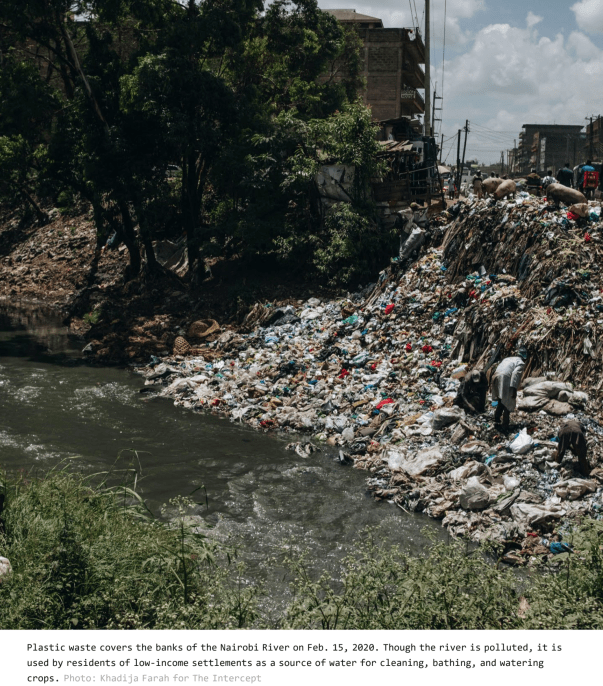
Where our well-intentioned “recycling” ends up - Even recyclable plastic can usually be recycled only once.
- Chemicals produced by plastic production and incineration are directly linked to climate change.
- Plastic is an environmental justice problem, as all the processes involved— from fracking to toxic incineration— disproportionately end up in low income communities and communities of color.
- Plastics do not break down, or go away- ever. They just get smaller and smaller, creating microplastics in our food and the environment.
- Due to microplastics, we are all ingesting a credit card’s worth of plastic every week.
- All our poop now contains microplastic too.
- There isn’t just one giant garbage patch in the ocean: there are five.
- There aren’t seven kinds of plastic; there are tens of thousands, (that’s what the #7 “other” category is for.) They are all largely untested for effects on human health.
It’s a truly horrifying list, isn’t it? I learned these facts and more when I took an online college course this fall, a class unlike any other I’d ever taken.
The class is entitled Beyond Plastic Pollution. Offered by Bennington College it is taught by visiting professor Judith Enck, formerly a regional administrator for the EPA under the Obama administration. What you need to know about Judith Enck is that she is an environmental superhero, and I don’t say that lightly. If you’ve never heard of her before, from here on out you will notice that she is quoted in practically every article published on the subject of plastic.
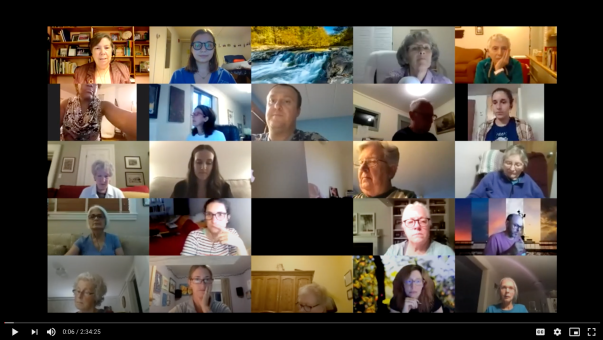
Enck has made it her mission in life to make a difference on the issue of plastics, which she calls, without hyperbole, “The greatest moral threat of our time.”
Here’s one more fact I learned in class: We currently produce 350 million tons of plastic every year. Sound like enough? Apparently not: plastic production is projected to triple by 2050.
Or, in Enck’s words: “We have to stop making plastic if we don’t want to be buried in it.”
Fortunately there is some good news to be had, starting with the fact that the Zoom class was attended by over seventy students, all of whom struck me as highly motivated people who planned to take Enck’s dire message out into the world. But Enck and her compatriots have already been instrumental in several pivotal initiatives to date including:
- The New York State Plastic Bag Ban, which became fully effective on Oct. 19th. (If you know of a store still giving out plastic bags in New York State you can call this hotline to report them: 518-402-8706)
- New Jersey’s recent passing of the strongest anti-plastic law in the country: banning polystyrene, plastic bags, paper AND plastic bags, effective May 2022.
- Most significant of all, there is an effort underway to address the plastic problem at a national level. In February of this year Sen. Tom Udall (D- NM) and Rep. Alan Lowenthal (D-CA) introduced to congress the Break Free From Plastic Pollution Act which includes bans and limits on polystyrene, plastic straws and plastic bags, a national container deposit program and a three year freeze on new plastic facilities in the US.

Judith Enck, in blue, with Rep Alan Lowenthal in Washington D.C.
Now that’s exciting. If you think so too, call your congressional representatives and ask them to support Senate bill #3263 and House bill #5845.
You may be wondering: whatever happened to that wine glass at the art opening?
Well, after Anne left I started to doubt she would ever return, because you know, that’s how parties are. As the head of the art center I imagined her getting interrupted seven times and ultimately forgetting all about my glass, for which I certainly wouldn’t blame her.
So I took the “recyclable” cup of wine, misplacing all my confidence in that sneaky little “chasing arrow” triangle. Two seconds later who should return but Anne, holding a glass wine glass and looking confused as to why I was drinking from a plastic cup after she had gone to all that trouble for me.
Oh, I was embarrassed. But worse than that, I was disappointed in myself. I realized what a short little window of patience I had. God forbid I have to walk around and look at art for ten minutes without an adult beverage in hand!
I’ve thought about that moment many times over the course of the last year. We can be aware of the super-scary facts about plastic and our environment, but even so— can we be counted upon to act upon this knowledge? Even when it isn’t entirely convenient?
I think the key to making positive change on plastic is two-pronged. First, people need to be informed not once, but repeatedly, armed with facts and horrified by the imagery too (hello plastic straw turtle.) They need to watch movies like The Story of Plastic, to find out what is really happening as opposed to the lies and half-truths we are told.
Second, we need to then use this information to make actual legislative change, so the rules are fair, consistent for everyone and reflect the truths we know.
After that? Maybe then we can celebrate with a nice glass of wine. And I do mean a glass.
—-

PS—I highly recommend the class Beyond Plastic Pollution, which is offered by Bennington College but you can take from the comfort of your own home. If you aren’t taking it for college credit it is only $100. It is being offered twice this coming Spring semester.
Buying the Future, One Giant Egyptian Cucumber at a Time
If I’ve learned one thing this year, it’s that we can’t recycle our way out of the plastic problem. If I’ve learned a second thing, it’s that we can’t buy our way out of it either.
It’s too bad, because if there’s one thing Americans are really, really good at, it’s buying things to make ourselves feel better. I don’t just mean wine and chocolate-chip-cookie-dough ice cream; I mean buying specific products to signal our value system, and make us feel like we are creating something good in the world while also buying ourselves more stuff.
We buy plastic products decorated with pink to “benefit breast cancer research;” we buy bucket soda to “benefit juvenile diabetes research.” If I look hard enough I bet I could find a cigarette whose sales benefit lung cancer research.

The same goes for many of the supposedly “eco-friendly” products on the market. I mean, if you are a person who needs a straw for medical reasons that’s one thing, but does the world really need so many metal straws? Do we need gold ones and glass ones? Do we really need kits for them with little straw cleaning brushes and a convenient container pouch? Don’t you wonder how many of these things will end up being discarded after a year or two of hanging out at the bottom of our purses and fanny packs?
Sometimes we’re being sold ordinary products, but produced in a way that is supposed to make you feel good. You can often tell they’re using the Virtue Strategy by counting the buzzwords: this super-soft throw blanket is made with vegan-organic, responsibly sourced, ethically produced, biocompatible eucalyptus fiber!! Made by pandas!
My point is, when at least one aspect of the problem is an over-abundance of stuff- why do we think buying more stuff will fix it?
So I’ve been trying NOT to buy stuff in the name of sustainability. Then recently I was given a gift certificate for my birthday to the eco-friendly-product website Earth Hero and I was excited to check it out, although a little apprehensive. Would I find items that would really help me to live garbage-free? Or would it be just regular shopping, but with more trendy adjectives?
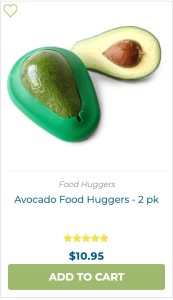
My reaction was mixed. There were a few things for sale on Earth Hero that I thought were just plain silly. Food huggers? Do we really need a specific product to keep our avocado halves from turning brown in the fridge? Bamboo flatware sets for school lunches? I’ve been putting stainless steel flatware in my kids’ lunch boxes since kindergarten and so far no one has sought psychiatric counseling over it.
After surfing around the site I selected three things I was curious to try out with my gift certificate:
– Two Toothbrushes made from bamboo and castor bean oil
– A set of “Heirloom Mayan Loofah Scrubbers” (sponges)
– A Stainless Steel Rectangle To Go Container
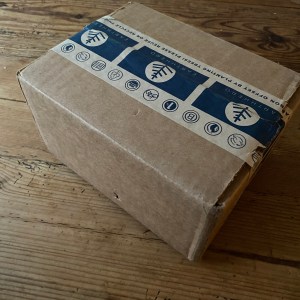
When the box showed up the other day I was delighted to note that Earth Hero had used paper tape to close the box: Yay! Ten points to Gryffindor! Inside the box I was impressed again by the lack of plastic packaging: paper held the sponges together and paper boxes enclosed the toothbrushes.
Then I noticed that the steel food container had vinyl stickers on it- ugh. Minus five points for Gryffindor.
By this time you may be wondering- hey wait… isn’t the lid on that food container also plastic? The Earth Hero website assures me this product is “plastic free”- so what gives?
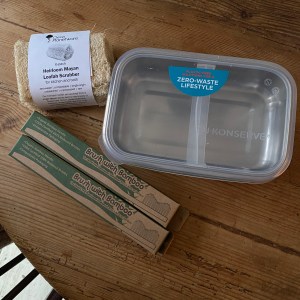
The lid, as it turns out, is made of silicone. And whether or not silicone is a kind of plastic depends— like so many of the definitions I’ve been seeking out this year— a whole lot on who you’re talking to.
The argument goes like this: silicone is made from sand, and therefore is a natural product more akin to rubber than plastic. But hold on! Because Life Without Plastic, which is another eco-friendly online vendor, argues pretty convincingly that silicone should not be considered harmless or eco-friendly.
“Like any plastic polymer, silicones are synthetic and include a mix of chemical additives derived from fossil fuels… Silicone does not biodegrade or decompose (certainly not in our lifetimes),” they explain on their website. “Silicones are very persistent in the environment.”
Contrast this with the heirloom loofah sponges which are 100% plant fiber. Giant Egyptian Cucumber to be exact, which is officially the coolest name for a plant I have ever heard. According to the package, when you are done with it, you can toss it in your compost or bury it in your garden and it will degrade in 30 days. My previous sponges were Ocelo, which are made of cellulose (wood pulp) but came with a tougher, “scrubby” component made of plastic, not to mention being encased in plastic packaging, so I consider this a big eco-upgrade.
And here’s the thing: although I was prepared to sacrifice some degree of effectiveness in exchange for biodegradability, the loofah sponge works noticeably better than my old Ocelo favorite. The bamboo toothbrush is kind of crazy- I can only say it feels substantial— like something Fred Flintstone might use— but seems to work every bit as well as my old plastic one.
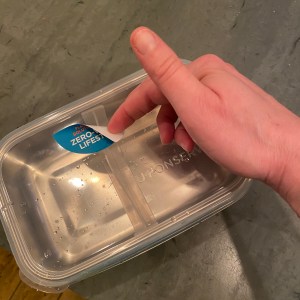
The food container is my least favorite of the group, not just because of the silicone lid, but also because I find that seeing the leftovers in the fridge is key to getting them eaten, so I like glass best. You can even find older Pyrex at junk and antique shops that has glass lids, and they also sell some at the Vermont Country Store, although as far as I can tell in-store only, not online. But I’m glad I had the opportunity to learn more about silicone, which seems like yet another deceptive switcheroo: an attempt to trade one bad, landfill-ready product for another: Throw away all your plastic Tupperware and replace it with earth-friendly silicone!! And next week we’ll come up with something else to replace that!
In Year of No Sugar, we were shocked to realize that the health food store, or health food aisle at our supermarket, was often every bit as bad a culprit for using excess sugar as everywhere else, and sometimes worse. (If you don’t believe me, try checking out the sugar content of “healthy” breakfast cereals, keeping in mind that 25 grams of sugar is equivalent to a candy bar.) There’s something about being told that you’re Doing The Right Thing— the healthy thing, the environmental thing— that seems to give us license to turn off our normal healthy skepticism. When that happens, we can end up doing precisely the opposite of what we wanted to do in the first place.
So don’t take things at face value. Don’t buy reusable plastic to take the place of disposable plastic: it is still plastic. Don’t buy glass or metal straws if you really don’t have to use a straw in the first place. And for crying out loud don’t buy an avocado-hugger, because you should really send that money to the Giant Egyptian Cucumber farmers instead.
I hear they’re very biocompatible.
 Eve O. Schaub